Vertical Elegance Meets Natural Expanse: The High-Rise, Low-Coverage Revolution in Hoskote
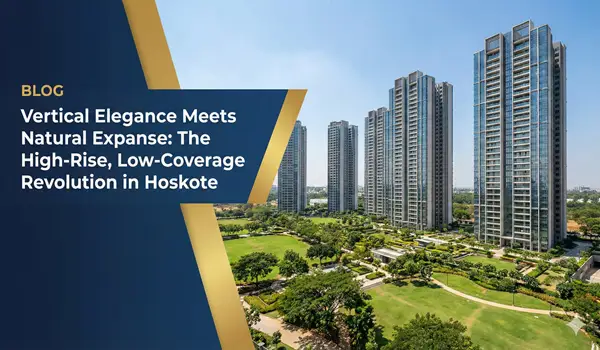
Welcome to a new way of living in East Bangalore, where modern design meets nature. Imagine a place like Godrej Parkshire, where high-rise homes stand tall, surrounded by massive green spaces. This project is changing how people think about city living.
For a long time, city life meant crowded spaces and a lack of greenery. But now, a new trend is taking over. It focuses on smart design that saves ground space for nature. This means you get the best of both worlds: modern comfort and the peace of a green sanctuary.
In the year 2026, Bangalore is growing faster than ever. As the city spreads, good living spaces are becoming harder to find. People want homes that offer more than just four walls. They want fresh air, quiet corners, and a connection to nature.
This is exactly what the "high-rise, low ground-coverage" model delivers. It is a smart way to build. It puts homes upwards instead of spreading them out. This leaves more land free for parks, gardens, and open areas.
1. The "Low Ground-Coverage" Advantage: Why Vertical is Better for Wellness
Think about living in a city. Most buildings take up a lot of space on the ground. This leaves very little room for trees or parks. But what if we built upwards instead? This is the idea behind low ground-coverage.
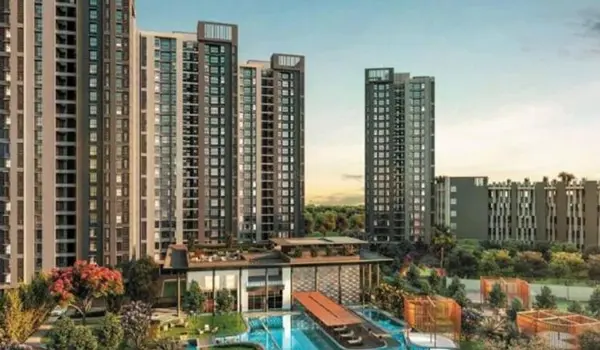
At Godrej Parkshire, the towers are designed with a 2B + G + 28 floor structure. By going vertical, the project minimizes its footprint on the earth.
This premium development offers luxury apartments with a starting price of ₹1.17 Crore onwards , making high-end green living accessible in this growing corridor. When you live in a place with low ground-coverage, you get many benefits:
- More Nature: Go out from your building into green natural gardens.
- Better Views: Look down onto lavish greenery rather than busy roads.
- Quiet Living: Green areas absorb noise, making your home a peaceful retreat.
2. 6.5 Acres of Dedicated Greenery
Imagine owning a piece of nature. For a project with 13.5 acres of total land, dedicating 6.5 acres (nearly 50%) to greenery is truly special. This large green space is the heart of the community, serving the 1,132 families within the township.
Comparison Table of Traditional vs. High-Rise Green Living Models
| Feature | Traditional City Layout | High-Rise Low-Coverage Model |
|---|---|---|
| Ground Usage | 60–70% Concrete | 20–30% Concrete |
| Open Green Space | Limited to small parks | 6.5+ Acres of dedicated nature |
| Air Quality | Average (City dust) | Superior (Natural air filtering) |
| Natural Light | Often blocked by neighbours | Maximum (High-rise towers) |
| Amenity Integration | Crowded common areas | Spacious, nature-led amenities |
3. Breathing Room: How 80% Open Spaces Improve Urban Air Quality
In today's cities, finding fresh, clean air is a challenge. A community designed with 80% open spaces changes this completely. This massive amount of open space acts like a giant lung for the entire area.
Latest 2026 News Update: In February 2026, the Bengaluru Science & Technology (BeST) Cluster highlighted that apartment complexes now act as "micro-cities." They noted that projects preserving large tree covers can reduce local temperatures by up to 3°C to 5°C, fighting the "urban heat island" effect that is heating up Bangalore.
4. The Skywalk Experience: Elevating Your Connection with Nature
Just imagine walking among the treetops, far above the ground. A Greenscape Skywalk is a feature that few projects offer. It completely changes how you interact with nature. It offers a bird's-eye view of the entire green landscape, providing a deep sense of peace that you can't find at ground level.
5. From Work Pods to Butterfly Parks: A Multi-Sensory Environment
The greenery in a low ground-coverage community is not just for show. It is designed to be fully used.
- Outdoor Nature Work Pods: Perfect for the 2026 hybrid workforce. Work in a quiet, shaded spot amidst trees.
- Butterfly Park & Avian Sanctuary: Joyful spaces for children to discover biodiversity.
- Aroma Gardens: Featuring plants chosen for their beautiful scents, engaging your sense of smell.
6. Hydro-Sensitive Design: Saving Every Drop for the Future
In the year 2026, water is the most important resource in Bangalore. The high-rise, low-coverage model at Godrej Parkshire is not just about looks; it is about "Hydro-Sensitive Urbanism." Because the buildings take up less space on the ground, more of the earth is "porous," allowing for a smarter water cycle.
- 95% Rainwater Harvesting: The project features advanced systems designed to save and recycle more than 95% of rainwater. This reduces the community's dependence on outside water sources.
- 10–15% Higher Rental Yield: In 2026, tenants are prioritizing complexes that do not rely on expensive water tankers. Because of this sustainable water design, Godrej Parkshire Bangalore is seeing a 10–15% higher rental yield compared to traditional projects.
- Groundwater Recharge: With 6.5 acres of soft soil, rainwater can naturally refill the underground water levels.
7. Why Hoskote is the "Neo-Whitefield" of 2026?
Location is everything. Hoskote is no longer just a suburb; it is now known as "Neo-Whitefield."
- The Double-Decker Metro: BMRCL is exploring a 16 km extension to Hoskote.
- Satellite Town Ring Road (STRR): This massive highway is now fully operational, connecting you to the Airport in 30 minutes.
- The Tech Hub: Proximity to ITPL and the 300-Acre Data Centre Park brings massive growth potential.
8. Investing in a Sustainable Future: Long-Term Value
In 2026, smart buyers look at long-term value. According to the "India Real Estate 2026" report by Colliers, "green living" is a primary force driving the housing cycle. Properties with significant open space and luxury configurations starting from ₹1.17 Cr for 2 BHK and ₹1.78 Cr for 3 BHK command a "Green Premium," meaning they appreciate faster and hold value better.